
Who Pays for Mold Removal in a NYC Co-op? Shareholder Guide
· Daniel Morcombe
Your proprietary lease and Real Property Law Section 235-b determine who pays. Learn when the board is liable and how to force action in NYC.

How Your Co-op Contract Decides Who Pays
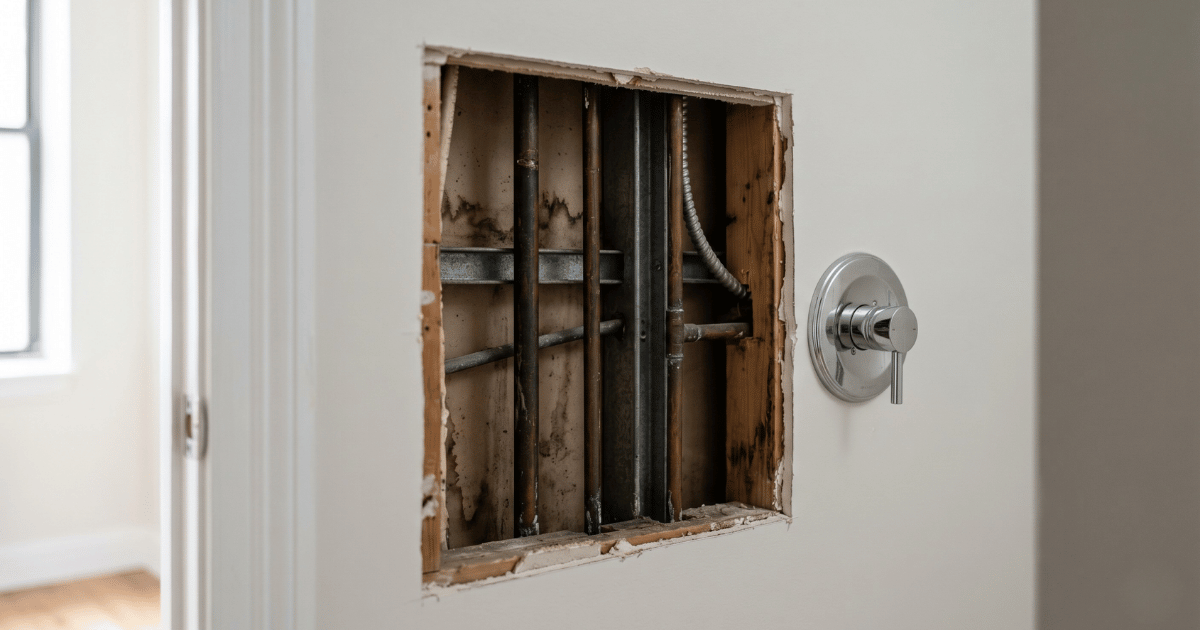
Start by reading your proprietary lease. Co-op lawyers have a simple way to explain where your responsibility ends. They call it the thumbnail rule. Press your thumbnail into the wall. That's roughly where your job ends. Everything inside the wall, like pipes, building risers, and beams, belongs to the co-op. Everything on the surface or attached to your unit, like faucets, fixtures, or your own AC unit, belongs to you.
In real life, mold from a slow leak inside a building plumbing stack is the board's problem. Mold from a bathtub seal you let leak for two years is yours. Your lease usually says that building systems are the co-op's job. Things inside your unit are the shareholder's. Read that section carefully before you agree to pay anything.
Article 32 of New York State Labor Law applies to co-ops just like it does to rental buildings. Owners can find the full compliance framework in our NYC Local Law 55 and Article 32 guide. If there's mold covering more than 10 square feet, and the building has 10 or more units, a licensed mold inspector has to write a work plan. A separate licensed contractor has to do the work. A licensed report is much harder for a board or insurer to wave away.
When The Co-op Board Is On The Hook
The board has a clear duty to fix problems when water comes from the building's systems or the outside of the building. Under HPD leak rules, leaks inside walls or the roof, drips from shared pipes, and water from a neighbor that gets into the building structure are all the co-op's problem to handle. These are not things shareholders need to fix on their own.
The neighbor situation surprises many shareholders. If water from the unit above drips into your apartment and causes mold, you talk to the board, not your neighbor. The co-op has to fix anything that hurts your health, even if a neighbor was the original cause. The board can then go after the neighbor for costs.
Attorney Marc Schneider of Schneider Mitola has seen cases where a board's slow response to outside leaks doubled both the repair cost and the shareholder's lawyer fees. The board waited. The mold got worse. The final bill was twice as high.
What Real Property Law Section 235-b Means For You
Real Property Law Section 235-b took effect in 1975. In the case Suarez v. Rivercross Tenants Corp., it was applied to co-op shareholders. The board has to deal with anything that puts your health or safety at risk. Mold is one of those things. A lease clause can't take away this duty.
This gives you a legal right that works on its own. Even if your lease says little about where water comes from, the warranty still protects you. Got mold that makes your apartment unhealthy to live in? The board has to fix it.
Section 235-b lets you hold back maintenance payments. Or you can sue for a rent reduction if the board won't act. Courts look at how bad the problem is. So withholding payments right away can be risky. A better way is to put your payments into an escrow account while the dispute is going on. This keeps your legal claim safe without giving the board a reason to come after you for non-payment.
What To Do When The Board Refuses To Act
Most shareholders who have trouble with their co-op board make the same mistake. They call to complain instead of writing. A written demand starts the legal process. Send a letter or email to the managing agent. Name the mold problem. Point to where the water is coming from. Set a clear deadline. Save every reply. Write down every time you get no reply.
If the board does nothing, file a complaint with HPD through 311. Our NYC landlord mold liability guide covers how HPD violations work and what fines look like. HPD checks co-ops under the same housing code it uses for rental buildings. If inspectors find mold, violations are issued. Class A violations have to be fixed within 90 days. Class B violations are more serious and have to be fixed within 30 days. Class C violations are right away dangerous and have to be fixed within 21 days. Daily fines grow over time. Open violations can stop the building from selling units or getting new insurance.
The next step is an HP action in Housing Court. This forces the co-op to fix the problem. In lease disputes, the side that wins gets lawyer fees under Real Property Law Section 234. File this action after you have a written repair demand and an HPD complaint on record. Courts want to see proof that nothing was done.
One thing to know: making a complaint about your own co-op can cause tension with neighbors and board members. The friction will feel real. But so will the mold.
Frequently Asked Questions
Can A Co-op Shareholder Withhold Maintenance Payments Over Unresolved Mold?
Yes. Real Property Law Section 235-b confirms this right, as seen in Suarez v. Rivercross Tenants Corp. There is risk. The board may say you broke your lease by stopping payments. A safer way is to put payments in escrow. This keeps your legal rights while not giving the board grounds to go after you for non-payment.
Does The Co-op Board Have To Use Article 32 Licensed Contractors For Mold In My Unit?
Yes, if the area is more than 10 square feet and the building has 10 or more units. Article 32 applies to co-op boards the same as it does to any building owner. The board can't tell maintenance staff to paint over mold and call it done.
What Does My HO6 Insurance Cover For Co-op Mold?
An HO6 policy covers mold if it came from a sudden water event like a burst pipe. It won't cover a slow leak the board ignored for months. Insurers often set a coverage limit of $10,000 to $20,000, which may not cover a big mold job. An outside Article 32 inspection makes your claim stronger.
The Escrow Risk
Withholding maintenance payments without setting up a real escrow account gives the board grounds to start eviction for non-payment. Want to start the legal paper trail the right way? Get an outside check first. Contact NYC Mold Removal to set up an Article 32 compliant check for your unit.