
Post-Mold Reconstruction in NYC: Costs, Permits & Materials
· Daniel Morcombe
After the mold is gone, the rebuild begins. Learn NYC DOB permit requirements, reconstruction costs, and which materials prevent mold from returning.

What Materials Must Be Replaced After Mold Cleanup In NYC
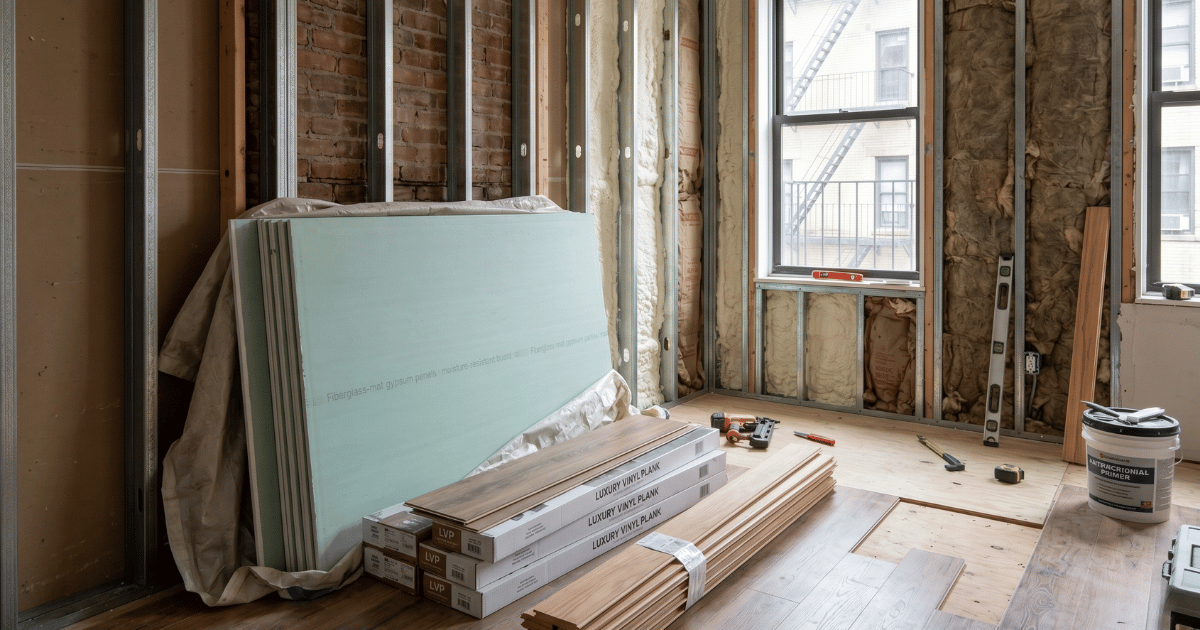
You can't put back regular drywall. The kind with paper on it? Nope. That's mold food. Under NYC building codes Chapter 25, bathroom and basement walls need fiberglass mat panels. They have no paper face. So mold can't eat them. They also fight off water way better.
Did the cleanup crew rip off your baseboards? They have to be put back again. Trim that sits on a cold wall or concrete floor gets wet fast. Use solid wood or PVC baseboards in damp spots. MDF? It soaks up water like a sponge. It falls apart. Skip it.
What about wall insulation? It needs to come out and go back again. Standard fiberglass holds water and dust. That's a perfect home for mold. Closed cell spray foam is way better. It blocks heat. It blocks water. Mold can't get through it.
Live in a basement or ground floor? Floor choice matters a lot. Crews often pull up wood floors to reach wet plywood. Put wood right back over a concrete slab? You're asking for trouble. Luxury vinyl planks look just like wood. But it's fully waterproof.
NYC Permit Rules For Post Mold Rebuild Work
Quick fixes don't need a permit. Patch some drywall? Put up new baseboards? Paint a treated ceiling? No permit needed. Crews can start right after the safety check passes.
But what if the work touches the building's bones? That's different. Want to take down a shared wall between apartments? You need a structural repair permit. That means an Alteration Type 2 form. NYC has strict rules for fire safety on shared walls. Standard drywall isn't allowed.
Moving plumbing pipes inside open walls also needs a permit. Co-op shareholders have more rules to follow. Our guide to hiring a licensed mold remediation contractor covers what the board will ask for. Building managers want a list of work, proof of insurance, and the safety paper. They want it before any work starts. Try to skip this? They can stop the job and fine you.
Buildings made before the war often have old rules. They need plaster that matches the original look.
The Rebuild Timeline: From Safety Paper To Move-In Ready
You can't start rebuilding work without a safety paper. For the full clearance process before this phase, read our guide on what to do after mold remediation in NYC. The outside inspector has to sign off first. Why? Because hiding fresh mold behind new walls is a nightmare waiting to happen.
A normal room takes two to three days. Workers hang the panels on day one. They cover the seams with mud. The mud needs 24 hours to dry. Day two, they sand it down and add a final coat. Then comes mold-fighting paint.
Old plaster jobs take longer. Skilled workers put on three coats. Each one needs time to dry. Wet weather makes it slower. That can add a full week.
What about getting stuff to your apartment? You can't just stack drywall on the sidewalk. So you need the freight elevator. Miss your booking? The whole job slides back days.
Rebuild Costs After Mold Cleanup In NYC: What To Budget
A standard bathroom rebuild costs $1,500 to $3,000. That covers the right drywall, new baseboards, and good paint. It doesn't cover fancy tiles or new fixtures.
Basement work runs $5,000 to $12,000. The size of the room matters a lot. Even fixing just the bottom two feet of the wall takes almost as long as fixing the whole wall. Most jobs also add a big dehumidifier and better drains.
The NYC Department of Consumer and Worker Protection wants a Home Improvement Contractor license. Any rebuild over $200 needs one. Workers charge $3 to $5 per square foot for normal drywall. Small jobs still cost a lot. Why? The crew still has to drive in, find parking, pay tolls, and wait for things to dry. That adds up.
How Long Is The Safety Paper Good For Rebuilding?
Building managers usually want rebuild work to start within 30 to 60 days of the safety paper date. The state doesn't set a hard limit. But boards push you to start fast. They don't want new leaks before the walls go back up.
Can I Use Standard Joint Compound On Mold-Fighting Drywall?
Yes. Standard joint compound dries hard. Mold can't eat it. The mold shield comes from EPA mold-fighting primer before the final paint. Not from the compound.
Does NYC Need A Permit To Replace Damaged Flooring After Mold?
No permit for new flooring. But what if you have to replace the subfloor or floor beams? That's structural work. You need a permit for that.
Final Words
Use the wrong materials in a damp NYC apartment? You'll pay for the same job twice in a few years. Pick the right stuff the first time. Want help? Contact NYC Mold Removal Services to set up a fully legal check and rebuild referral.