
Can You Stay in Your NYC Apartment During Mold Remediation?
· Daniel Morcombe
Most NYC tenants can stay for small contained jobs. Here's exactly when you can, when you can't, and what Local Law 55 requires your landlord to do first.

When You Can Stay: Small Jobs And What Sealing The Area Actually Does
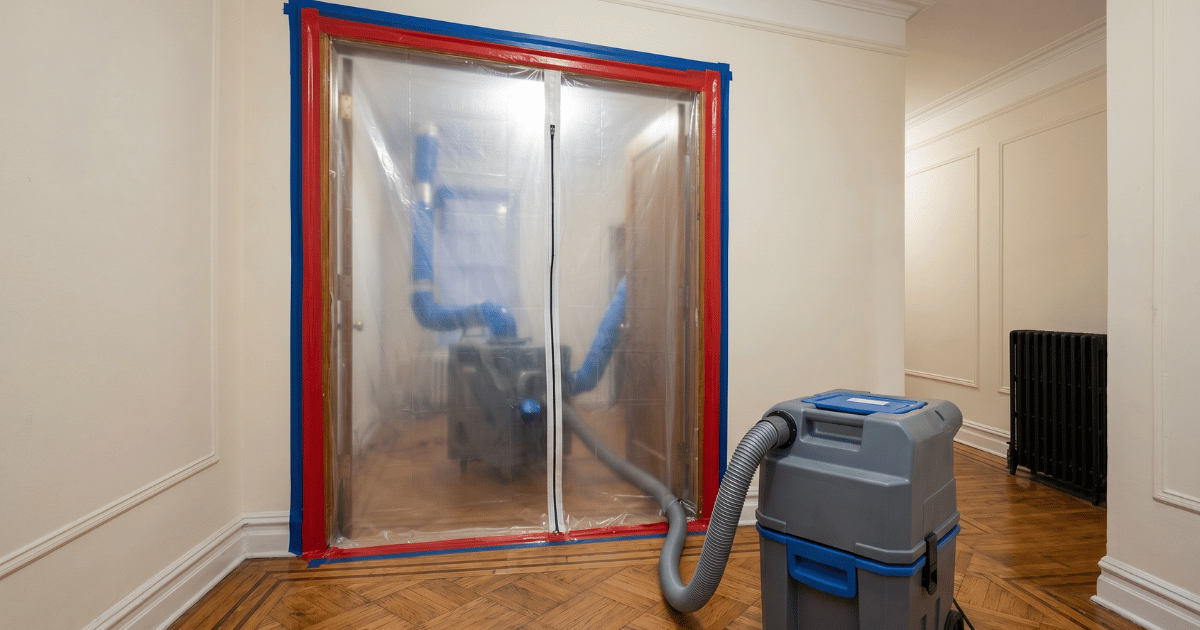
For jobs under 100 square feet, a licensed crew sets up what the EPA calls limited containment. Plastic sheeting goes around the work area. HEPA air cleaners run inside. Air vents are sealed.
This setup keeps the work area at lower air pressure than the rest of the apartment. Air moves in, not out. Mold spores stay inside the sealed area. They can't drift into your living room.
A simple eye test: the plastic over the doorway should pull slightly inward. If it pushes out, the seal is bad.
For jobs set up this way, you can use parts of your apartment that aren't part of the work area. Not part of the work area means sealed off by a door that closes tight. It's not just an open door to the next room.
When You Must Leave: Three Conditions With No Gray Area
When the work area reaches 100 square feet, the crew needs full containment around the whole space. At that point, they'll be working throughout the apartment, not just in one closed corner. You and everyone else have to leave.
The second trigger is chemical spraying. Some crews spray a chemical mist into the space after removing mold. The NYC Health Department guidelines are clear. Spraying or fogging methods can hurt people's health if anyone is in space. Ask your contractor before work starts if they plan to use fogging. If the answer is yes, you have to leave. Get a written re-entry timeline before they begin.
The third trigger is who is in the apartment. Children under 12. Elderly people. Anyone with asthma, lung problems, or a weak immune system. The NYC Health Department puts all these people in a high risk group. A job under 100 square feet can still be dangerous for them. Does this fit your household? Talk to your doctor.
Any one of those three applies: you go. No debate.
What Local Law 55 Says Your Landlord Must Do First
Local Law 55 of 2018, at Section 27-2017.8 of the NYC Administrative Code, says what the landlord has to do before work starts. The landlord has to cover or move your stuff in the work area. They have to seal doorways and vents with plastic sheeting to stop dust from spreading. They have to give you written notice about what will happen and when.
That notice should reach you before the crew arrives. Not when they're already in your hallway.
Here's why this matters. If a contractor shows up without barriers, with vents open, and no setup to seal off the work, they're not doing real mold cleanup. They're disturbing mold and letting spores travel through your air system into every room. Before anyone starts, check that the crew is following Article 32 rules and has proper containment set up. Our guide on how to hire a licensed mold remediation contractor in NYC shows exactly what to look for. If they aren't, you have the right to stop the job.
Your Right To Temporary Housing
When the job requires you to leave, who pays depends on why the mold is there.
If the mold came from a building problem like a leaking pipe or a roof that was never fixed, your landlord may have to pay somewhere else for you to stay. This comes from N.Y. Real Property Law Section 235-b, the warranty of habitability. In NYC, housing rules call mold a Class C problem. That means it's right away dangerous and has to be fixed within 24 hours. If the landlord knows about it and won't pay for your temporary housing, they can face legal trouble.
For a full breakdown of how to claim this right, what reasonable housing means under NYC law, and what to do if your landlord says no, read our full guide on tenant relocation rights during mold cleanup.
How To Prepare Your Apartment Before The Crew Shows Up
Move your medications, food, and anything you can't cover out of the work area before the crew arrives. Put them in a room that will stay closed for the whole job.
Tell the crew to keep your air system turned off until the work area is fully sealed. Running forced air while mold is being disturbed can take a small bathroom problem and spread it through the whole apartment fast.
Cover items with small openings, like clothes, bedding, and open shelves in nearby rooms. Proper containment handles most of the spore spread, but distance still matters.
Anyone in your home have breathing problems, asthma, or any health condition? Tell the contractor before work begins. Under Local Law 55's work rules, this can change how they have to do the job.
Frequently Asked Questions
Can My Pets Stay In The Apartment During Mold Cleanup?
No. Animals can be hurt by spores and chemicals just like people with breathing problems. Even for a small job where you can stay, your pets should leave. Board them, take them to a neighbor, or get a dog walker for the full day. Don't leave them in a closed room near the work area.
How Long Before I Can Return After Full Cleanup?
Wait 24 to 48 hours after the main work ends and air cleaners are removed. The space needs time to settle before the safety check is done. Most people can return one to two days after the gear is gone, as long as the space passes the clean air test. Get the re-entry timeline in writing before work begins.
Who Pays If I Need To Stay In A Hotel?
Your landlord pays if the mold came from a building problem they're in charge of. Write everything down. Note where the water came from, the HPD record, and every letter or message with your landlord. If they say no, call 311 to put it on record. Then file an HP action in Housing Court to make them pay.
I Have Asthma. Can I Stay Even For A Small Job?
No, unless the job is under 10 square feet, uses no fogging, and you stay in a fully sealed separate room. NYC Health Department guidelines call asthma a condition that needs extra care. If you feel sick or your doctor tells you to leave, leave. Your doctor can also ask for a free home check through the NYC Health Department's Online Registry. That can help you write down the issue for HPD if needed later.
The Landlord Contractor Risk
Mold contractors know that most tenants won't ask about containment setup before work starts. The crew hired by your landlord works for your landlord. Not for you. Knowing about proper containment is your only shield against a botched job that spreads spores into your living space. Want to be safe? Get an outside check before their crew arrives by contacting NYC Mold Removal to book a visit.