
Mold Removal in Manhattan Apartments: Costs & Process
· Daniel Morcombe
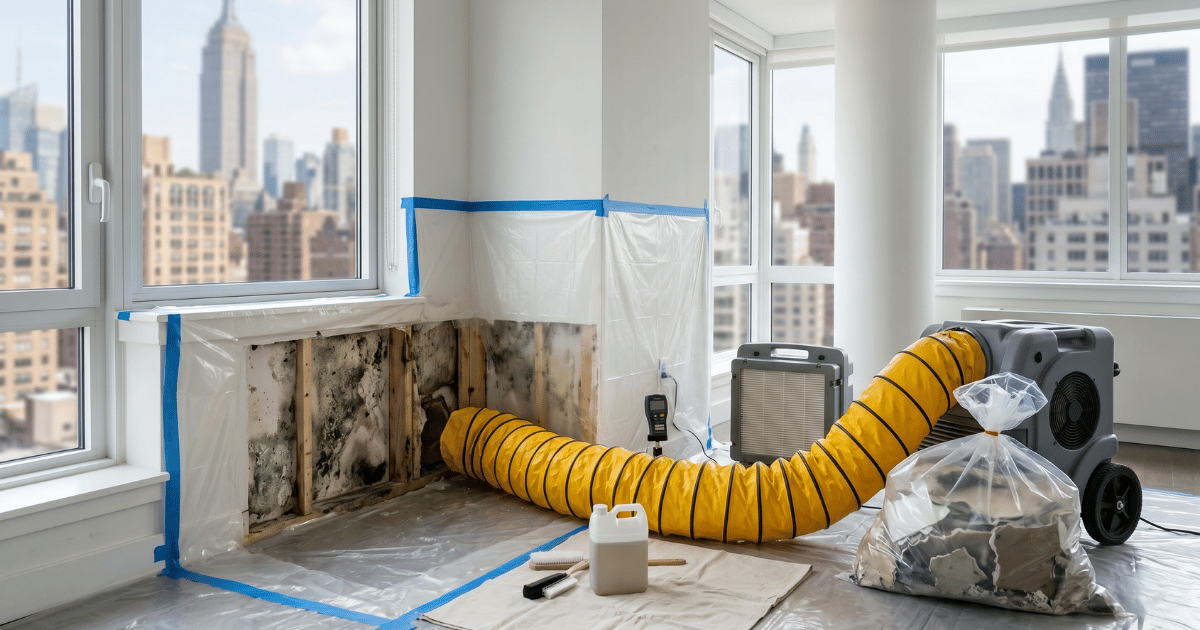
Manhattan mold remediation costs 20 to 30 percent more than other NYC boroughs. Learn what drives the price, how Article 32 works, and what to budget.

What Makes Manhattan Mold Removal More Expensive
There are three main things that make prices in Manhattan higher than in other parts of the city. These things are not about the mold.
The first step is to get inside. In many Manhattan buildings, you have to move your cleaning tools using the freight elevator. The building staff will set the times for using it. You might have to book the elevator days early. Sometimes, you need to pay a fee each time you use it.
In old buildings with small halls, teams may need to bring equipment in several parts. A job in a Queens row house can be set up in two hours. But the same job in a 1920s walkup in Manhattan can take all morning just to set up.
The second step is to take the mess away. Moldy things have to go out with people who are licensed to haul trash. In Manhattan, these haulers ask for more money. This is because they pay for parking and bridge tolls. Most jobs in Manhattan cost $200 to $500 more to haul trash than in any other place in the city.
The third step is getting approval from the building. A lot of co-op and condo buildings in Manhattan ask for contractor approval before you can start work. You need to show the building proof of insurance and proof of the Article 32 license. You might also need to meet with the super or the property manager. You should plan for this step to take about one to two more workdays.
The Manhattan Mold Cleanup Process: From Check to Final Safety Test
Manhattan cleanup jobs still use the same Article 32 rules that are used across the state. But, there are extra steps here. This is because there are more buildings.
The process starts with a licensed mold expert. Under Article 32, the person who checks for mold and the crew who clean it up must work for different companies. The mold expert will come to your apartment. They find out where the water comes from. They may take samples if they need to. They also write a plan that shows what has to be done.
This part takes from one day to three days. After that, the cleanup team checks the freight elevator times. They also look at the building rules to plan their work.
Active cleanup often takes two to five days for jobs with sealed areas. The crew puts seals on the work area. They move out damaged things like drywall and insulation. They use HEPA filtered vacuums the whole time. All trash gets taken out the freight entrance in sealed bags. Nothing goes through the main hallways.
After the work is done, a licensed person from another company will do the last safety look over. For what happens after clearance, read our guide on what to do after mold remediation in NYC. Air samples need to show normal levels of mold. Only then can people use the space again or fix it. To see if a contractor has the right Article 32 license before you sign, read our guide on hiring licensed contractors.
Common Mold Causes in Manhattan Buildings: Air Systems, Walls, and Pipes
Most mold in Manhattan apartments that were built after 1980 comes from water dripping from air conditioners. The wall AC units you find in many new condos and rentals make water during the whole summer. If dust blocks the drain, water backs up under the unit and gets into the floor. The water leak is slow and does not make much noise. It can keep going for months before you see anything wrong.
Water leaking in from the outside walls is the main issue in old buildings. This happens a lot when they break HPD repair codes. Old bricks and bad window caulk let water get inside the walls. Corner apartments and top floor units get the most problems. This is because these spots have two outside walls that meet. So, there are more ways for water to move into the building.
Pipe sweating is not loud. In summer, cold water pipes that do not have any insulation can sweat inside the walls. It is not a big leak. It is just steady dampness. This makes the wall stay wet for a long time. Mold can start to grow because of this.
Steam pipe leaks are not the same as other problems. A lot of old buildings in Manhattan use steam heat. The first pipes made from cast iron can get small leaks inside the walls after many years. The things to look for are not easy to spot. There might be a soft sound like a hiss. You might feel a wall that keeps warm even when the heat is not on. By the time people check it, mold might have already spread for weeks.
Frequently Asked Questions
Can the Same Company Do My Manhattan Mold Inspection and Cleanup?
No. New York State law says that the inspection company and the cleanup company have to be two different licensed businesses. This rule is the same everywhere in the state. If any contractor says they can do both jobs, they are breaking the law. Any safety report that they give will not be good. The NYS Department of Labor's Contractor Search Tool lets you see what kind of license a company has before you agree to anything.
Does Building Management Need to Approve My Mold Contractor?
In most Manhattan co-op and condo buildings, the answer is yes. The building management will want a certificate of insurance. They will also ask for proof of the Article 32 license. Let them know ahead of time before any cleanup starts. If you rent, you do not need building approval to hire someone to check. But you should tell the super before the crew goes in. Add two to three workdays to your plan for this step.
How Long Does the Full Manhattan Mold Cleanup Process Take?
Active cleanup takes about two to five days. The whole job, from check by a licensed pro up to the last safety test, usually needs two to four weeks in Manhattan. Getting the freight elevator and building ok can add more time.This is not something you see with a single-family job. You should ask your contractor for a written list of steps for the project before the work starts.
Is My Manhattan Landlord Responsible for Mold Cleanup Costs?
Yes, if the mold is from a building problem like a leaking pipe, broken wall, or poor air flow, the landlord has to fix it under NYC housing rules. If the mold is from something the tenant did, there can be a talk about who will have to pay. After you give a written notice and if the landlord does not do anything, call 311 and file a complaint with HPD. This will put the issue on the record.
The Housing Court Risk
Manhattan landlords and co-op groups often move fast when there is mold. The price for an HPD Class C ticket, plus problems in Housing Court, is much higher than the price for fixing the issue the right way. Is your building waiting and not doing anything? A licensed inspection will push things forward. Contact NYC Mold Removal to book a licensed inspection and get the papers you need.