
Mold Removal in Brooklyn Brownstones: Costs & What to Expect
· Daniel Morcombe
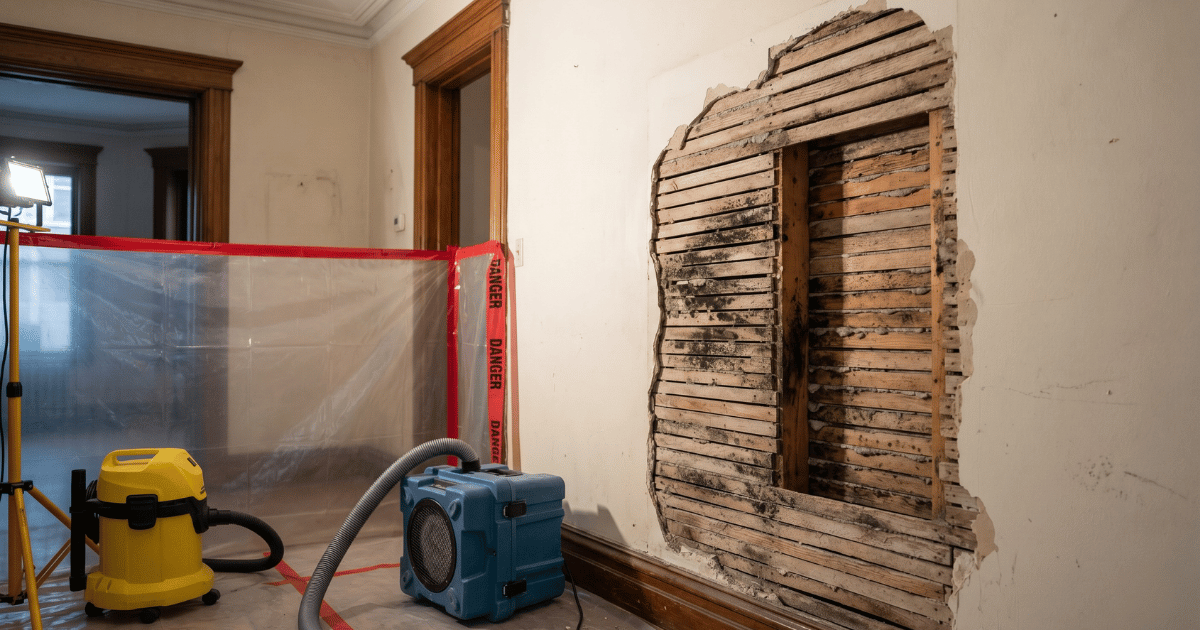
Brooklyn brownstone mold removal costs \$2,000 to \$8,000. Plaster lath walls, party walls, and Article 32 all complicate the job. Here's what you're dealing with.

Why Brooklyn Brownstones Get Mold So Often
Most Brooklyn brownstones went up during the years from the 1870s to the 1930s. They are made with wood frames and thick plaster that goes over thin wood strips. There were no barriers for water in the walls. When a pipe has drops or a radiator has a leak, the water stays trapped in the walls for days. People do not see it right away. By the time people do, mold has already started to grow.
Brooklyn summers are hot and wet. Basements in these row houses feel damp all year. Garden apartments under street level are easy to find in Carroll Gardens and Crown Heights in brownstone buildings. These places get the most HPD mold complaints in the city. This happens because water gets into old walls under the street, as the walls were not made for people to live there. A small dehumidifier in the corner will not fix this problem.
Old flat roofs can add to the problem. A lot of brownstones have tar and gravel roofs. These roofs can crack and lift as time goes on. Water can get inside at the top of the building and go down behind walls. You might not notice any stain until it comes out three floors down. By that time, the wall behind the plaster had been wet for weeks.
Old Plaster Walls: What Removal Actually Looks Like
Modern drywall comes as a flat board. You just cut the part you need, bag it, and then go to the next step. Old brownstone plaster is not the same. People put it on in layers over thin wood strips nailed to the frame. When water gets into these layers and mold starts to grow, there is no board you can just take out.
You chip and pry. There is dust every step of the way. This is why the price to remove old plaster is 15 to 25 percent higher. The extra money is for the work and the safety you need. It is not just a way to make you pay more.
Under Article 32 rules, when mold covers more than 10 square feet, a licensed person writes a work plan before the job begins. This plan tells what needs to be done. It says to seal up the spot, put up barriers, and use HEPA filters. The people who clean have to follow this plan just as it is written. In most brownstone jobs, the plan says to take out all the plaster in the area that is affected. This is because the wood strips behind it are often wet too.
Some brownstones may also have asbestos in the old tile glue or around pipes. Buildings that were put up before 1940 can have the same risks, see our NYC pre-war apartment mold guide. If the person checking the place finds this, it must be taken out on its own. The group cleaning up the mold can only come back after that.
Lead paint can be a problem in buildings that were made before 1978. If you touch old painted walls or wood, you need to wear safety gear. There are also special rules for getting rid of trash from work. For homes built before 1940, you should plan for these risks. A contractor has to let you know about the dangers. If they do not tell you, it is best to not hire them.
How Shared Walls Make the Job Harder
A party wall is the wall that you and your neighbor have in between your homes. This wall is where your house stops and your neighbor’s house starts. If your neighbor has a roof leak, a dripping pipe, or too much humidity on their side, water can get pushed into your wall.
You can fix your side. But the mold is still coming from next door. So, the mold will be back.
This problem doesn't happen in stand-alone houses or normal apartment buildings. You will only see it in attached row houses. A careful person who checks the home will find where the water really comes from. That means he will look for more than what you can see. Sometimes, this person needs to look at DOB party wall records and talk to the neighbor. This talk can end fast or it can last for weeks.
In Bed-Stuy and Crown Heights, many brownstones belong to people who want to rent them out. It can take a lot of time to find the right person to talk to about the building. On blocks in Park Slope or Cobble Hill, there are more owners who live in their homes. These places are easier for you to work with. But if someone checks and sees water coming from the shared wall and you do not talk to the person who owns the other side, you might end up paying to fix the same problem twice.
Brooklyn Brownstone Mold Cleanup Costs
Most one-unit jobs cost from $2,000 to $8,000. The lower price is for a small bathroom or when a wall area is sealed. The higher price is for a whole floor with lots of rooms, full plaster removal, extra risks, and a last safety review.
There are a few things that can change the total cost. When you take off old plaster, it adds about 15 to 25 percent more for each square foot. If the job is big, that can add $500 to $2,000 more compared to doing the same job in a newer building.
Garden units that are below ground also need to be waterproofed. The basic wall waterproofing at garden level costs about $1,500 to $5,000. This is a different cost from cleaning up mold. If they find asbestos, you need to add $1,000 to $4,000, depending on how much is there.
The last safety check costs between $350 and $600. It is needed under Article 32. Local Law 61 of 2018 says that any building with 10 or more units must send paperwork to NYC DEP before work starts. You will also need to send the paperwork again when the building passes the last safety check.
One thing many owners do not think about is how much it costs to fix the walls again. Our post-mold reconstruction guide for NYC covers those costs in full. Cleanup work takes things away from inside. Putting things back is not the same part of the work. You should get ready to spend from $1,500 to $5,000 to fix up a brownstone like most people do. Under Article 32, the same licensed cleanup person can do both jobs.
Frequently Asked Questions
Is A Licensed Contractor Required For Brownstone Mold In Brooklyn?
Yes, you will need this for any job that covers at least 10 square feet. Article 32 of NYS Labor Law says you need a licensed mold inspector and another licensed cleanup team. The inspector makes the plan and does the last safety look. The cleanup team goes by that plan. A company is not allowed to do both jobs.
How Do I Verify a Contractor's License Before Hiring?
Search the NYS Department of Labor's database at the Contractor Search Tool by using the contractor's name or license number. Check that the license is still good and it fits the kind of work you need. The person who checks for mold and the person who cleans it up have different types of licenses. Ask for both of their license numbers before you agree to anything.
Can Mold In My Brownstone Come From The Building Next Door?
Yes. Shared walls can take in water from a neighbor’s roof leak, plumbing problem, or water issue. If the problem is on their side, fixing your side alone will not stop it for good. A licensed person can note where the water is coming from. This can help you get your neighbor to fix their side too.
Does Homeowners or Landlord Insurance Cover Brownstone Mold Cleanup?
Yes, if the mold is from a sudden thing like a burst pipe or storm, it can be covered. It will not pay for things that happen because of long-term neglect. In NYC, many insurance groups now want you to have papers from an Article 32 licensed person before they pay for mold problems. You should talk to your insurance group before you start any work. If you wait until after the job to tell them, they may say no.
The Party Wall Risk
If you ignore water coming from a shared wall, the mold will keep coming back. One cleanup will turn into money you spend every year. Make sure your checkup finds the true cause. Contact NYC Mold Removal for a good look.