
NYC Mold Remediation Insurance Claims: What's Covered
· Daniel Morcombe
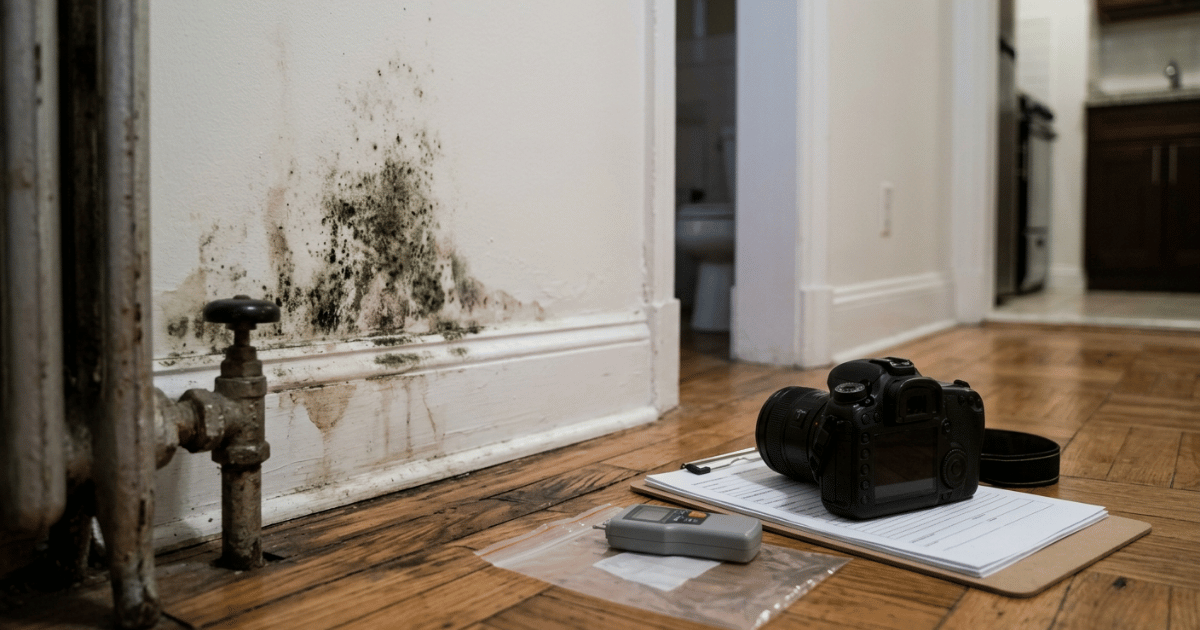
NYC admitted insurers can't legally exclude mold from a covered event. Here's what your co-op, condo, or rental policy covers and how to get paid.

When NYC Insurance Covers Mold And When It Does Not
Your policy will take care of mold if it comes from a sudden problem that your policy covers. For example, if a pipe breaks, a storm harms the roof, or your neighbor's washing machine upstairs leaks water onto your ceiling, mold can show up after these things happen. Mold that grows because of these types of problems can be paid for.
What's not covered? This includes mold from a slow leak that you did not take care of. It also includes water that has been dripping from an AC unit for two summers. A bathroom that has stayed damp since you moved in is also on the list. Insurers call these things homeowner neglect. They will not pay for this.
Flooding is a thing on its own. If water damage started the mold problem, read our NYC mold after water damage guide before filing. If water got in during a storm or because of street flooding, your normal policy will not pay for it. You need a different flood policy for this.
Many fights come up when people do not agree if the water damage happened suddenly or over time. You need to write down all things about the water problem the day it starts. Mark the date. Take photos and videos. This record can help the claim get paid or turned down.
The NYC Rule Most People Never Learn: Admitted Carriers Cannot Exclude This
New York's Department of Financial Services has not signed off on any mold limit for admitted insurance carriers that sell plans on NYC buildings. You can read more about this in Opinion 03-04-04. Under New York Insurance Law Section 2307(b), any clause that does not match with public interest can't be used.
Is your insurance company allowed to work in New York? Are they trying to say no to your mold claim because of a mold exclusion? That reason might not work for them.
The main exception is with non-admitted carriers. The insurers that are not licensed to write standard policies in New York are called non-admitted carriers. They can put in mold exclusions. A lot of NYC condo and co-op buildings get their master insurance from these non-admitted carriers. You will see this happen in older buildings because they want to lower their costs.
Look at the main page of your policy. It will tell you if the carrier is admitted or not. If the master policy for the building is not admitted, it could have a mold rule that says mold is not covered. This means your claim may not work, no matter what made the damage happen.
Co-op, Condo, And Rental: Which Policy Pays For Mold In NYC
New York City has 140,300 co-ops and 191,100 condos, based on the 2023 NYC Vacancy Survey. Each one needs a different kind of insurance.
If you rent, your renters policy can help protect your things if mold from a covered event damages them. It will not pay to clean or fix the walls, ceiling, or floors. The building owner has to take care of that.
If you have a co-op share, your HO-6 policy will cover the inside part of your unit. The co-op’s master policy will take care of the building, its shared spaces, and the pipes. If mold is caused by a leak in the building pipe or from the building’s AC system, the co-op’s insurance should take care of it.
If you have a condo, your HO-6 will cover the inside of your place. The building’s main insurance takes care of shared spaces. There are two types of main insurance plans. A bare-walls-in plan covers just the building’s structure. An all-in plan also pays for the finishes inside your unit. Make sure you know what your building has before you try to file a claim.
If mold is from your neighbor's unit, your neighbor's insurance and the building's main policy may both help. Start by filing a claim with your own insurance. They will then contact your neighbor's insurer.
What NYC Insurers Require Before They Pay: The Article 32 Paper Rule
NYC mold claims need special paperwork. You will not find this in other states. New York State's Article 32 says you must have someone who is licensed to check mold if there is more than 10 square feet of it. This person must not be from the same company as the cleanup team. The one who checks for mold will write a plan before anyone starts the work.
NYC insurance companies now use the Article 32 inspection report as the standard paperwork. This report shows what the mold is, where the water is from, and tells what event started it. Without this report, the adjuster only has your word.
If you hire someone without a license, you may lose your claim papers for good. An adjuster could say no one proved the cause and stop your coverage. See our guide onhow to hire a licensed mold remediation contractor in NYC before you sign any papers. Check contractor licenses on the NYS DOL page before you sign any papers.
Five Reasons NYC Mold Claims Get Denied
Telling the insurer late is the first reason for this. Many policies in NYC ask you to report a water problem soon after it happens. Call your insurer right away when you see mold.
Cleaning up before you file is another reason. If you take out the mess early, it can get rid of proof about what made the mold. Without this proof, the adjuster will not have much to use.
Having a non-admitted carrier is the third one. You should look at your main policy page before you think you are covered. A non-admitted master policy might have a mold rule that says it is not covered.
The slow leak argument is the fourth. The insurance company may say that mold is from water over a long time, not from just one quick accident. You should protect yourself by showing the real date when the water event took place. Use an inspection report that shows the mold is linked to that event.
Using someone who is not licensed is the fifth point. If you hire a person who does not have an Article 32 license, the insurance company can ask about all the work. The insurer can say no to your claim for this reason.
Frequently Asked Questions
How Long Do I Have To Notify My Insurer After I Find Mold In My NYC Apartment?
Most people who own or rent homes in NYC have to report the issue within 30 to 60 days. Look at your policy and read the duties after a loss. Call your insurer as soon as you find the mold.
Can I Start Cleanup Before I File The Insurance Claim?
No. If you clean anything before a licensed person writes down the problem, you might lose proof. The report has to show what made the mold before you move or take away anything. Take some pictures first. Then, call your insurer.
My Upstairs Neighbor's Pipe Burst And Caused Mold In My Unit. Whose Insurance Pays?
File with your own insurer first. Your company will deal with your neighbor's insurer for you through something called subrogation. In New York City co-ops and condos, the building’s master policy could cover it too. That depends on who handles the pipe in your lease.
Does Renters Insurance Cover A Hotel Stay If Mold Makes My NYC Apartment Unlivable?
Yes, if the mold is there because of a covered event, your renters policy will pay for a hotel while they clean up the mold. But if the mold is from your landlord's neglect, your renters policy will not pay for the hotel. Your landlord may have to give you a place to stay under NYC law.
The Admitted Carrier Protection Risk
The DFS admitted carrier rule is a public record. A lot of NYC policyholders do not read it before they file. Did you get mold from a covered event? Check if your carrier is admitted in New York. If they are, they may not be able to use that rule against you. When you first spot mold, call a licensed Article 32 expert. Do not call a cleanup crew or your building super first. The expert's report shows the mold is from an event your policy must take care of. Contact NYC Mold Removal to set up an outside check.