
Mold Removal in Park Slope and Prospect Heights
· NYC Mold Removal Services
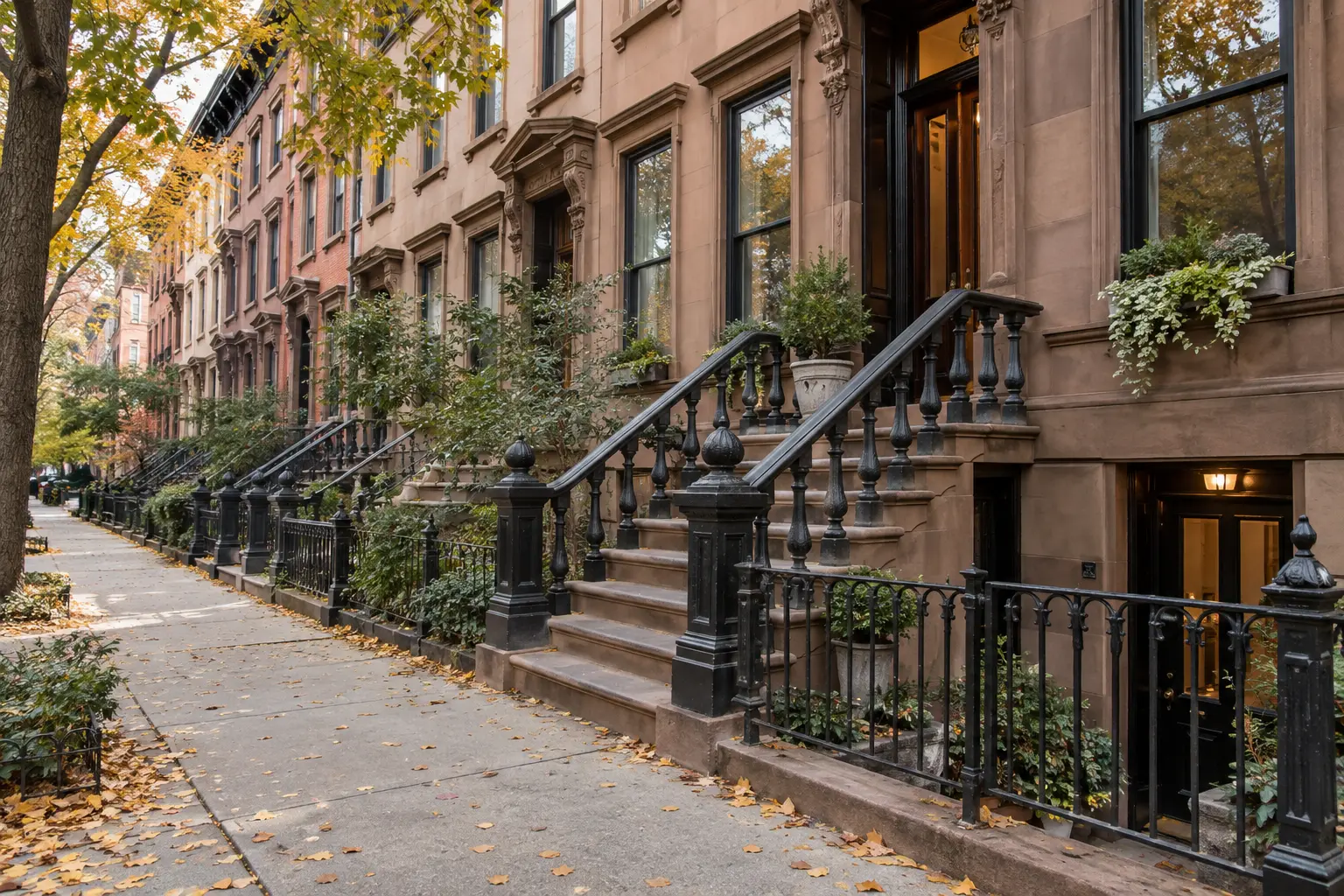
Landmarked brownstones, garden-level units, and co-op conversions set the mold removal scope in Park Slope and Prospect Heights.
The housing here is dominated by 19th-century brownstones and limestone row houses, many landmarked, many subdivided into co-op or rental units decades after they were built. Two features of that stock drive almost every mould job in the neighbourhood: a garden level that sits partly below grade, and a front façade whose repair is regulated.
Where the Water Comes From in a Brownstone
| Source | Where it shows up | Who normally repairs it |
|---|---|---|
| Cornice and roof edge | Top-floor ceiling, front rooms | Building or owner; often scaffolding required |
| Front façade and lintels | Exterior wall faces, around windows | Owner; landmark review may apply |
| Rear extension roof | Ceiling of the rear parlour or kitchen | Owner |
| Garden-level grade and areaway | Lower rear walls, under stairs | Owner |
| Original plumbing risers | Vertical stacks through bathrooms | Building, in a converted multi-unit |
| Chimney flues, disused | Interior chimney breast walls | Owner |
The disused chimney is the one people miss. An unlined, uncapped flue in an old row house takes on rain and discharges moisture into the masonry of the chimney breast, producing growth on an interior wall with no plumbing anywhere near it.
Garden Levels
Garden apartments are the most common mould call in this area, and the reason is structural rather than behavioural. The floor sits partly below exterior grade, the rear areaway drains toward the building if it was never regraded, and the original masonry was built with no damp-proof course. When a later renovation ran drywall directly to the floor on a furring strip, you have a sealed cavity against damp masonry.
The sequencing question matters more here than the removal itself. Remediating a garden-level wall while the water is still arriving produces a clean wall and the same condition the following spring. Basement waterproofing versus mold remediation covers how to order the two, and basement mold removal in NYC covers the work itself.
Landmark Status Changes the Timeline, Not the Protocol
Much of Park Slope sits within a historic district. That does not affect the Article 32 remediation process at all, interior removal is interior work. What it affects is the repair that stops the water, when that repair is on a regulated façade. Cornice, lintel, window, and front-wall work in a historic district can require review before it proceeds.
The practical consequence is that the moisture source may take months to repair while the interior condition continues. The right response is usually to stabilise and document rather than to remediate twice: get the assessment, record the condition, and put interim moisture control in place while the façade work is permitted. Doing the removal first, before the water stops, is the expensive order.
Converted Co-ops and Who Is Responsible
Many of these houses were converted to co-ops with proprietary leases that are decades old and drafted before anyone contemplated mould. The line between the building's responsibility and the shareholder's usually tracks the structure-versus-interior distinction, but the specific lease language governs.
Practically: if the water comes from the roof, cornice, façade, or a common riser, that is almost always a building repair. If it comes from a fixture inside the unit, it is almost always yours. The dispute is usually about which. Our posts on who pays for mold removal in a NYC co-op and what to do when a co-op board refuses to remediate cover that ground, and mold in your NYC co-op covers board approval and access.
How the Work Runs
The affected area is measured first. Over 10 square feet, Article 32 requires a licensed assessor to write a remediation protocol, a separately licensed remediation contractor to execute it under containment with HEPA filtration and negative air, and an independent assessor to perform clearance before reconstruction.
In a row house with original plaster and wood detail, the containment conversation is worth having up front. Plaster over wood lath behaves differently from drywall, and the scope should state explicitly what is being removed versus cleaned and how original detail is protected.
Frequently Asked Questions
Does landmark status stop mold remediation in Park Slope?
No. Interior remediation is not regulated by landmark status. What can be regulated is the exterior repair that stops the water, cornice, lintel, or front façade work in a historic district may require review, which can delay the source repair even though the interior work can proceed.
Why does my garden-level apartment keep getting mold after cleaning?
Because the moisture source is still active. Garden levels sit partly below grade in masonry built without a damp-proof course, often with a rear areaway draining toward the building. Until the water is controlled, removal is a recurring expense rather than a fix.
Who pays for mold removal in a Park Slope co-op?
It depends on where the water originates and on the proprietary lease. Water from the roof, cornice, façade, or a common riser is typically a building responsibility; water from a fixture inside the unit is typically the shareholder's. The lease language governs the specific case.
Can mold grow on a wall with no plumbing behind it?
Yes. In old row houses a disused, unlined chimney flue takes on rain and moves moisture into the masonry of the chimney breast, producing growth on an interior wall far from any pipe. Uninsulated exterior walls produce the same result through winter condensation.
Should I remediate before the façade repair is approved?
Usually not the full removal. The better sequence is to get the licensed assessment, document the condition thoroughly, and apply interim moisture control while the exterior repair is permitted, then remediate once. Removing material while water is still arriving means paying for the job twice.