
Basement Waterproofing vs. Mold Remediation in NYC
· NYC Mold Removal Services
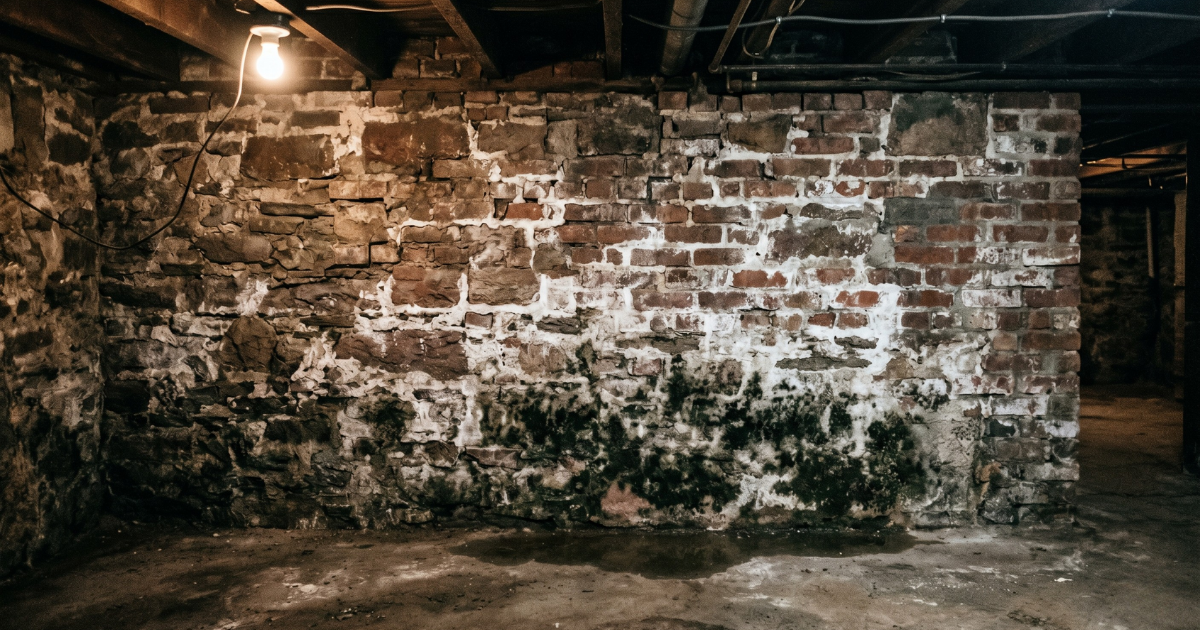
Waterproofing stops water, remediation removes mold — NYC basements often need both. Here's the right sequence and who's liable if you skip one.

A basement mold job that only treats the mold, or only waterproofs the foundation, tends to fail within a year in NYC. The two contractors solve different problems, and getting the sequence wrong is the single biggest reason basement mold "comes back" after a paid remediation. Under NYC Local Law 55, an owner is responsible for fixing the underlying moisture condition, not just the visible mold — and Article 32 dictates the order regardless of which contractor knocks on your door first.
Why These Are Two Different Trades
Waterproofing contractors — french drains, sump pumps, exterior membranes, interior drainage systems — are structural and plumbing trades. They aren't required to hold an Article 32 license because they're not touching mold. Mold remediation is licensed separately: any job over 10 square feet requires a licensed NYS Article 32 Mold Remediator, and a separately licensed Article 32 Mold Assessor must inspect first and write the Remediation Protocol. No single company can legally perform all three roles — waterproofing, assessment, and remediation — on the same job when Article 32 licensing applies to the mold portion, because the assessor and remediator must remain independent of each other even if the same company also handles the waterproofing scope.
Getting the Sequence Wrong Is Why Mold Returns
If a remediator removes moldy drywall and treats the studs but the foundation is still actively leaking, new drywall installed on schedule will show mold again within 6 to 12 months — this is the single most common complaint NYC basement owners have after paying for remediation. The fix is not more remediation; it's identifying that the moisture source was never addressed. Conversely, waterproofing a foundation without remediating existing mold leaves a licensed health hazard in place even after the water problem is solved — HPD can still cite the property for the untreated mold regardless of how dry the basement now is.
The Correct Order of Operations
- Moisture source assessment first. A licensed Article 32 assessor's moisture-mapping inspection identifies whether the source is active (ongoing leak, sewer backup, rising groundwater) or resolved (a one-time event that's since been fixed).
- If the source is active, waterproofing generally needs to happen before or concurrently with remediation — remediating a basement that's still taking on water is a temporary fix that a licensed remediator should refuse to warranty.
- If the source is resolved, remediation can proceed on its own, but a follow-up moisture inspection is still worth doing before final clearance testing.
- Clearance testing always comes last, performed by an independent licensed assessor, regardless of which trade went first.
Who's Liable if You Only Do One
If a landlord waterproofs but ignores existing mold, HPD can still issue a Class B or C violation for the mold itself — a dry basement doesn't clear an open violation; only a licensed remediation and clearance certificate does. If a landlord remediates but ignores an active moisture source, and mold returns within months, a tenant has a stronger case that the landlord knew about the underlying condition and failed to correct it, which can support a rent abatement or HP action claim beyond just the original violation.
Cost of Doing Both vs. Cutting a Corner
Waterproofing alone in NYC basements typically runs $3,000 to $15,000 depending on the method (interior drainage vs. full exterior excavation). Article 32 remediation alone typically runs $2,500 to $8,000+ for a basement-scale job. Doing both together is rarely simply additive — most contractors coordinate a combined timeline that saves on demolition and access costs versus paying for two separate teardowns of the same wall. Skipping waterproofing to save money on a mold job with an active moisture source is the most expensive mistake in this category: it usually means paying for remediation twice.
Frequently Asked Questions
Can the same company do my basement waterproofing and mold remediation?
A company can offer both services, but if the mold remediation portion requires Article 32 licensing, the assessment and remediation still must be performed by two independent licensed entities. The waterproofing work itself isn't subject to that independence requirement.
Do I need a mold assessment before hiring a waterproofer?
Not always — if there's no visible mold and you're waterproofing preventatively, a waterproofing contractor can proceed without an Article 32 assessor. But if mold is already visible, get the Article 32 assessment first so you know whether the mold job needs to happen before, after, or alongside the waterproofing.
My landlord waterproofed the basement but the mold is still there — what can I do?
File an HPD complaint. A dry basement with visible mold is still an open violation; HPD inspectors cite the mold condition itself, not just the moisture source. You can also request the landlord provide an Article 32 clearance certificate — if none exists, the mold hasn't been legally remediated regardless of the waterproofing work done.
How do I know if my basement's moisture source is actually fixed?
Ask for documentation from the waterproofing contractor and consider a follow-up moisture-mapping inspection from a licensed Article 32 assessor before any new drywall or finishing goes in. Confirming dryness before rebuilding is far cheaper than tearing out new materials a year later.