
Is Black Mold Dangerous? A NYC Reality Check
· NYC Mold Removal Services
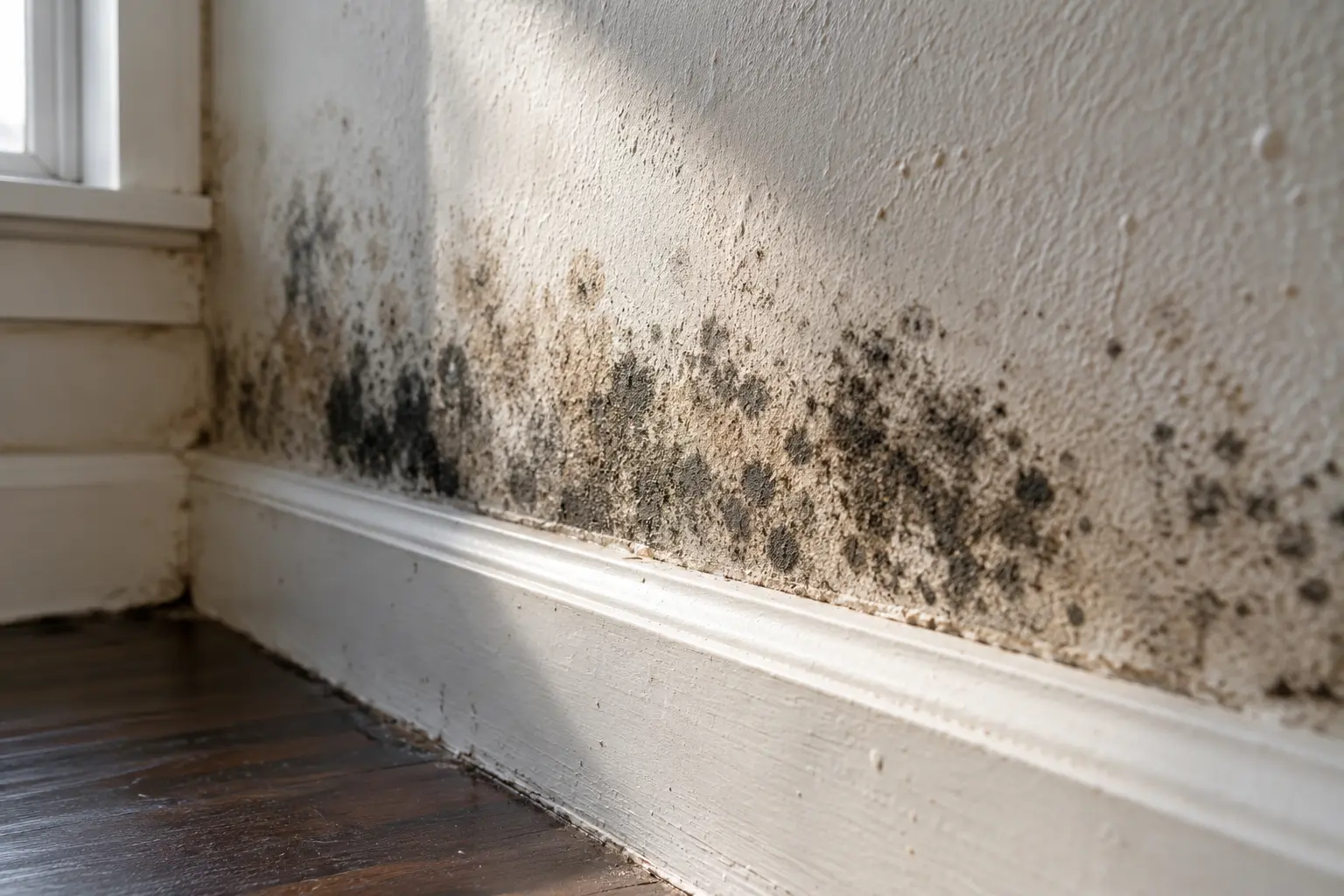
What black mold is, what the evidence supports about health effects, and why the colour of a stain is the least useful thing about it.
"Black mold" is not a species. It is a colour, and dozens of ordinary indoor moulds present as dark green or black on a wall. The term usually refers to Stachybotrys chartarum, but the only way to know whether a dark stain is Stachybotrys is a laboratory identification, not a photograph and not a visual assessment.
This matters practically. The colour of the stain does not determine the remediation scope, the cost, or the urgency. The size of the affected area and the moisture source do.
What Is Actually Established
Public health bodies including the CDC and the EPA take a consistent position: indoor dampness and mould growth are associated with respiratory effects, and the appropriate response is to remove the growth and fix the water, regardless of which species is present.
Associated effects, supported by the research:
- Upper respiratory symptoms: congestion, throat and sinus irritation, coughing
- Eye and skin irritation
- Worsening of existing asthma, which is the best-documented effect
- Hypersensitivity responses in people with mould allergy
Where the evidence is weaker is in the wide-ranging systemic claims attached to the phrase "toxic mold" in popular coverage. Stachybotrys does produce mycotoxins under certain growth conditions, but a causal link between residential exposure and severe systemic illness is not established in the mainstream literature. Our post on mold and asthma in NYC covers the respiratory evidence in detail.
None of that is a reason to tolerate growth. It is a reason not to make the decision based on colour.
Who Is Most Affected
Risk is not evenly distributed. Those with meaningfully higher sensitivity include infants and young children, older adults, people with asthma or chronic respiratory conditions, people with mould allergy, and anyone immunocompromised. In an NYC apartment this changes the sequencing more than the scope, a household with an asthmatic child has a stronger case for temporary relocation during the work, which this guide to staying during remediation covers.
If symptoms are present and persistent, that is a conversation for a physician. An assessor can tell you what is growing and where the water is; only a clinician can connect it to a person's health.
Why Colour Is the Wrong Variable
| What people ask | What actually drives the response |
|---|---|
| Is it black? | Is it over 10 square feet? |
| What species is it? | Where is the water coming from? |
| Is it toxic? | How long has the material been wet? |
| Should I panic? | Is anyone in the household in a higher-risk group? |
New York's Article 32 threshold is area-based, not species-based. Growth over 10 square feet requires a licensed assessor to write a remediation protocol, a separate licensed remediation contractor to perform the work, and an independent assessor to clear it. A dark stain of two square feet and a light stain of two square feet are treated identically under that rule.
What to Do When You Find a Dark Stain
- Do not disturb it. Scrubbing or sanding aerosolises spores into the room. Dry removal of a suspected growth is the single most common way a small problem spreads.
- Photograph it with a scale object and note the date. This record matters if a landlord or board dispute follows.
- Find the water. A stain is the symptom; the moisture is the condition. See mold behind walls for how concealed sources are located.
- Measure the area. Under or over 10 square feet determines whether you are in the Article 32 process at all.
- Get a licensed assessment if the source is unclear, the area is substantial, or you need documentation.
Frequently Asked Questions
Can you identify black mold by looking at it?
No. Multiple common indoor genera present as dark green or black. Confirming Stachybotrys chartarum requires a surface or bulk sample identified by an accredited laboratory. Any contractor who identifies a species by eye is guessing.
Is black mold more dangerous than other mold?
The research does not support treating it as categorically more hazardous in a residential setting. Indoor dampness and mould growth of any species are associated with respiratory effects, and the recommended response is the same: remove the growth and correct the moisture.
Do I need to leave my apartment if I find black mold?
Not automatically. Relocation decisions turn on the size of the work, the containment used, and whether anyone in the household is in a higher-risk group, infants, older adults, asthmatics, or immunocompromised people. A licensed assessor can advise on the specific situation.
Can I clean black mold myself?
Growth under 10 square feet on a hard, non-porous surface can often be handled by an owner, provided the water source is corrected first. Anything over 10 square feet, anything on porous material like drywall or insulation, and anything inside an HVAC system should go to a licensed remediation contractor under an assessor's protocol.
Does black mold always mean a hidden leak?
It means sustained moisture, which usually means a leak, chronic condensation, or poor ventilation. In NYC apartments the three most common sources are a failing riser, water from the unit above, and condensation on an uninsulated exterior wall.