
Mold Clean-Up in NYC: DIY vs. When to Call a Pro
· Daniel Morcombe
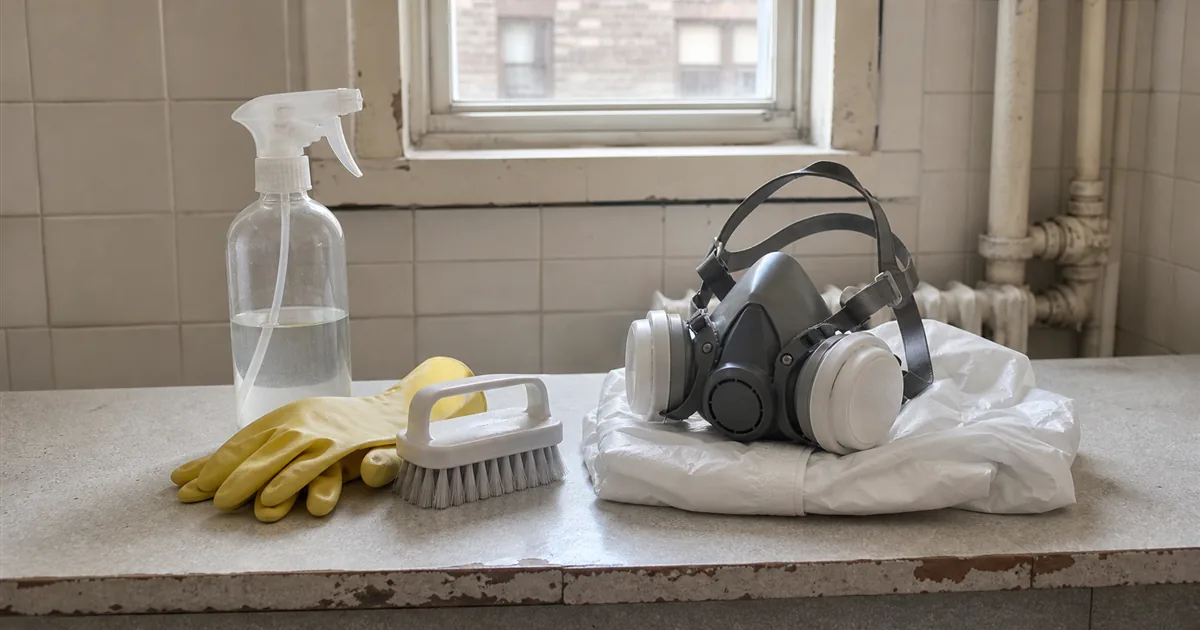
Small hard-surface mold may be DIY. Learn the 10-square-foot line, safe cleaning, and when NYC requires licensed professionals.
On hard, non-porous tile, metal or glass surfaces, the do-it-yourself cleanup is normally limited to less than about 10 square feet. If you have a large area, if the material is porous, if the HVAC system could be contaminated, if there is a lot of water damage or if the source of the contamination is irreparable then you should use a professional. Licensed Article 32 pros required for NYC work over 10 square feet.
The 10-Square-Foot Decision Line
According to the EPA mold guidance, when mold is less than about 10 square feet or less than about a patch 3 feet by 3 feet, the resident can often handle it. Size is not the only test however. Material, water source, occupant health and hidden growth all count.
| Situation | DIY or professional | Reason |
|---|---|---|
| Small patch on tile or metal | DIY may be reasonable | Hard surface can be cleaned and dried |
| Mold inside drywall or insulation | Professional | Porous material may require controlled removal |
| More than 10 square feet | Licensed professionals | Article 32 process applies |
| Mold inside HVAC equipment | Professional | Operation may distribute contamination |
| Sewage or extensive water damage | Professional | Added hazards |
| Recurring mold after cleaning | Assessment | Moisture source remains unresolved |
Measure the total affected area.
What Is Reasonable to Clean Yourself
If the source of the water has been corrected, DIY cleanup is for a limited patch on an accessible, washable surface. Keep children, pets and people at greater medical risk out of the work. The CDC recommends that people with allergies, asthma, chronic lung disease or immune suppression should stay out of mold cleanup.
For the hard surface, clean with detergent and water and dry well. Not every mold remediation job is a bleach job. If you decide to use it, follow the directions that are on the product label. Ventilate and use no more than one cup of household bleach to a gallon of water. Do not mix bleach with ammonia or any other cleaning product. Our apartment mold prevention guide has the moisture controls that keep it from coming back.
What Should Not Be a DIY Job
Do not simply open a moldy wall, pull out insulation, disturb a large ceiling or disassemble HVAC equipment. Porous material may support growth underneath the surface and demolition may result in dust spreading beyond the original area. If you can smell or see a permanent stain, it is also time to check the leak or condensation situation.
If the area affected is larger than 10 square feet, the water damage is extensive, the contamination is hidden or the safe source repair requires another trade, stop and call a professional. Avoid using contaminated HVAC equipment. Color does not determine scope of black mold removal: if dark growth is driving the decision, our black mold removal guide explains why. For concealed cavities, see mold behind walls.
Protective Steps for a Small Job
CDC mold cleanup guidance recommends an NIOSH-approved N95, gloves and dust-excluding goggles. Open-sided safety glasses do not provide the same eye protection.
- Seal the leak. Allow the surface to dry.
- Keep other people and pets away from the immediate area.
- Put on the N95, gloves, and fitted goggles.
- If the cleaning products need ventilation, open a window or door.
- Clean the hard surface with water and detergent.
- Thoroughly dry the surface and surrounding materials.
- Wash your hands, or bag or clean used rags.
- Check again for moisture or returning growth.
Never point a fan directly at mold while cleaning; it can move particles into the room.
When New York Law Removes the Choice
New York’s Article 32 process requires a licensed mold assessor and a separate licensed remediation contractor for covered work over 10 square feet. The work is defined by the assessor in a Remediation Protocol. The scope is followed by the remediator and the post-remediation assessment is performed by the assessor. The company should not be approving its own covered job.
Check the licenses before you sign. Remediation proposals should be compared to the same written protocol and not to different verbal descriptions. Keep on file the source-repair record, protocol, remediation documentation and final assessment. A landlord is responsible for fixing mold caused by landlord conditions so renters should notify the landlord of the condition in writing prior to any cleanup that might remove evidence.
Frequently Asked Questions
How much mold can I clean myself?
EPA says an area 10 sq. ft. or less is usually a DIY job. Keep that advice to hard surfaces you can reach and a source you can fix. If you have hidden growth, porous material, extensive water damage, HVAC contamination or health concerns, professional help sooner is justified.
Does bleach kill mold?
Bleach can be used on hard surfaces, but hard surfaces can also be cleaned with detergent and water. Follow label instructions and ventilate; use no more than one cup of household bleach per gallon of water. Never mix bleach with ammonia or any other cleaning products.
What should I wear?
For a small cleanup, wear at least a NIOSH-approved N95 respirator, protective gloves and fitted goggles to keep dust and particles out. Keep covered with clothing and observe the precautions on the product label. People with higher medical risk should not participate in the cleanup.
When is DIY not allowed in NYC?
Assessment & remediation firms must be licensed Article 32 professionals for covered remediation of more than 10 square feet. Even below that threshold, don’t DIY work involving extensive water damage, hidden cavities, HVAC contamination, unsafe demolition, or a source you can’t repair.
Why can’t I clean drywall mold?
Drywall is porous, so growth and water damage may extend below the painted face inside it. Cleaning the surface does not mean that the core or cavity are clean and dry. Removal may be controlled as per written scope.