
Mold Behind Walls in NYC: How It Is Found and Removed
· Daniel Morcombe
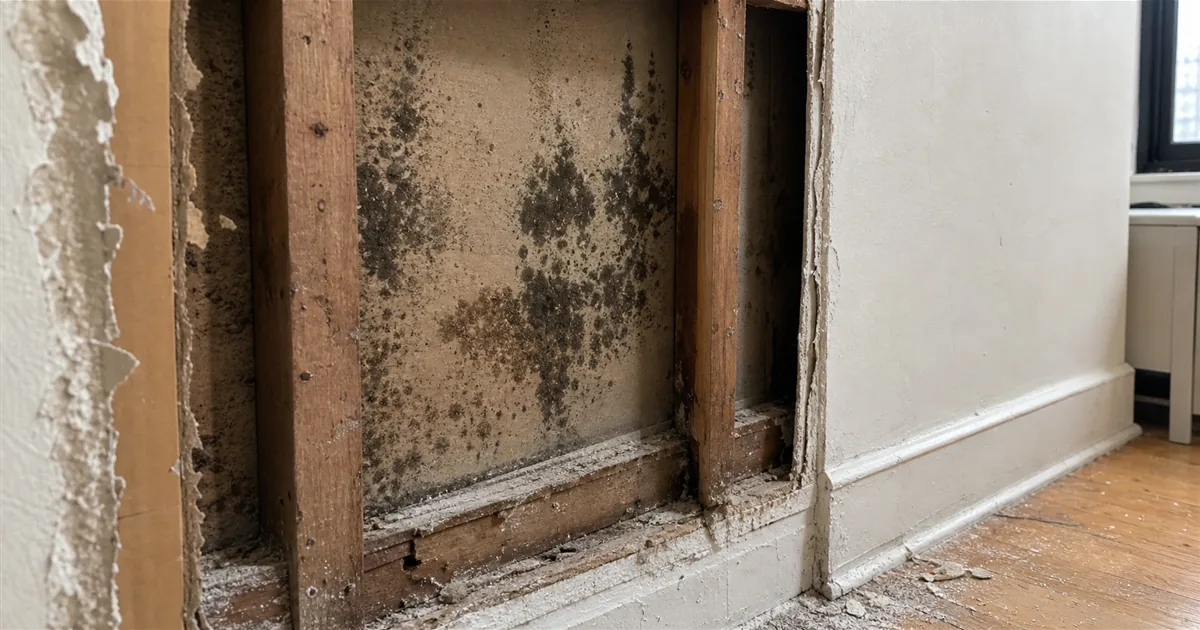
Mold behind walls is located with moisture tools, then affected drywall is removed under containment. See the licensed NYC removal process.
Mold behind a wall is confirmed by following the path of moisture and focused inspection or sampling, and then removed by opening the affected area under containment, removal of moldy porous material, cleaning of retained surfaces, and drying of the cavity before reconstruction. Mold can't be wiped off of drywall. Any mold project in NYC over 10 square feet requires licensed Article 32 assessment and remediation.
Signs Mold May Be Behind a Wall
A persistent musty odor, a recurring stain, bubbling paint, warped finish, or a known leak can justify investigation in the property. None show the extent of mold. The assessor must connect the visible clue to the water path and determine if drywall, insulation, wood, or other porous material is wet or not.
Don’t begin by making a large exploratory cut. Disturbing any latent growth can spread dust throughout the room and obliterate evidence of the initial condition. First a licensed assessor can narrow down the area. The EPA mold guidance says that hidden growth can be behind drywall, wallpaper, paneling, or around pipes inside walls.
How Professionals Confirm the Location
The assessor will look at leak history, inspect finishes and take moisture readings in suspect areas and surrounding areas. Thermal imaging can detect surface temperature anomalies, while a borescope can provide a limited view into a cavity. These tools find moisture or visible conditions, they do not see or identify mold through the wall.
It may still require focused sampling or access. For a full explanation of the tool, see the hidden detection guide. What is important for this removal page is that the assessor has documented the location, area affected, material and moisture source prior to the wall being opened for remediation by the separate licensed company.
Each tool answers a narrow question, and none of them see mold through the wall.
| Detection step | What it reveals | Limitation |
|---|---|---|
| Leak history review | Likely water path | Hints only, not evidence of mold |
| Moisture readings | Damp suspect and surrounding areas | Shows moisture, not mold |
| Thermal imaging | Surface temperature anomalies | Cannot identify mold through the wall |
| Borescope | Limited view into a cavity | Partial view only |
| Focused sampling or access | Confirms the condition | Requires opening or sampling |
In-Wall Mold Removal, Step by Step
- Fix or control the water source. Reconstruction must not start until the leak or damp condition stops.
- Follow the protocol. For work over 10 square feet, a licensed assessor writes the Article 32 Remediation Protocol.
- Set containment. The path used to remove debris and the occupied areas are protected by the separate remediation crew.
- Open up the affected wall. The crew takes out the drywall, insulation and other porous material that can’t be salvaged within the defined scope.
- Clean retained structure. Remaining framing and surfaces are cleaned according to the protocol.
- Dry the cavity. Make sure the area is dry before any new material is placed.
- Removal complete. A licensed assessor conducts a post-remediation assessment before reconstruction.
Why Spraying or Painting Does Not Work
Drywall and insulation are porous materials. Cleaning or coating the visible face does not eliminate the affected part as mold can develop in the material. Paint can hide staining for a while with moisture and damaged material hiding behind it. The correct scope eliminates what cannot be salvaged and only retains material that can be cleaned and dried.
A spray can doesn’t fix a pipe, facade, roof or waterproofing problem either. The water damage guide tells you about the source response after a leak. Ask the remediator to write down the cleaning step, material-removal boundary and drying check, not only the product that will be applied.
Repair, Cost, and Clearance
Do not close the wall until the source of the moisture has been corrected, the cavity is dry and the required clearance has been completed. Remediation should be followed by reconstruction, not be done at the same time. We have that handoff in our reconstruction guide.
A small, contained single room remediation usually ranges from $1,500 to $3,500, depending on the scope of work and the borough. The work behind the wall may involve access, material removal, containment, drying and rebuilding. The actual quote will have to come after the assessment. Ask whether the quote includes rebuilding or stops after clearance. Check the assessor and remediator with the state mold program and keep their roles separate for any work over 10 square feet.
Frequently Asked Questions
How do I know if mold is behind my wall?
Look for a musty smell, recurring stain, bubbling paint, warped finish or known leak inside. They are hints, not evidence. A licensed assessor can trace moisture, compare readings and recommend targeted access or sampling to confirm the condition.
Can mold be removed without opening the wall?
Not if the drywall or insulation inside the wall is molded. The affected material must be removed. Detection tools can reduce the opening and minimize unnecessary demolition, but they don’t turn contaminated porous material to a clean surface.
Is it safe to sleep in the room?
It depends on the condition, extent and occupants. Do not disturb the wall and keep vulnerable people away from visible or suspected growths. Ask the assessor first about temporary precautions. Discuss personal symptoms or medical risk with a doctor.
How much does behind-wall mold removal cost?
A small contained single room remediation generally costs between $1,500 and $3,500. Behind wall scope will vary depending on access, material, containment, drying, and reconstruction for affected wall area. First get the licensed assessment and compare quotes on the same written protocol.
Do I need testing after removal?
Any project larger than 10 square feet must be assessed by a licensed assessor following remediation, as required by Article 32. Clearance confirms that the work is complete according to the protocol before the area is closed for reconstruction. The assessor must be independent of the remediation company.