
Crawl Space Mold Removal in NYC: Causes, Process, and Cost Factors
· Daniel Morcombe
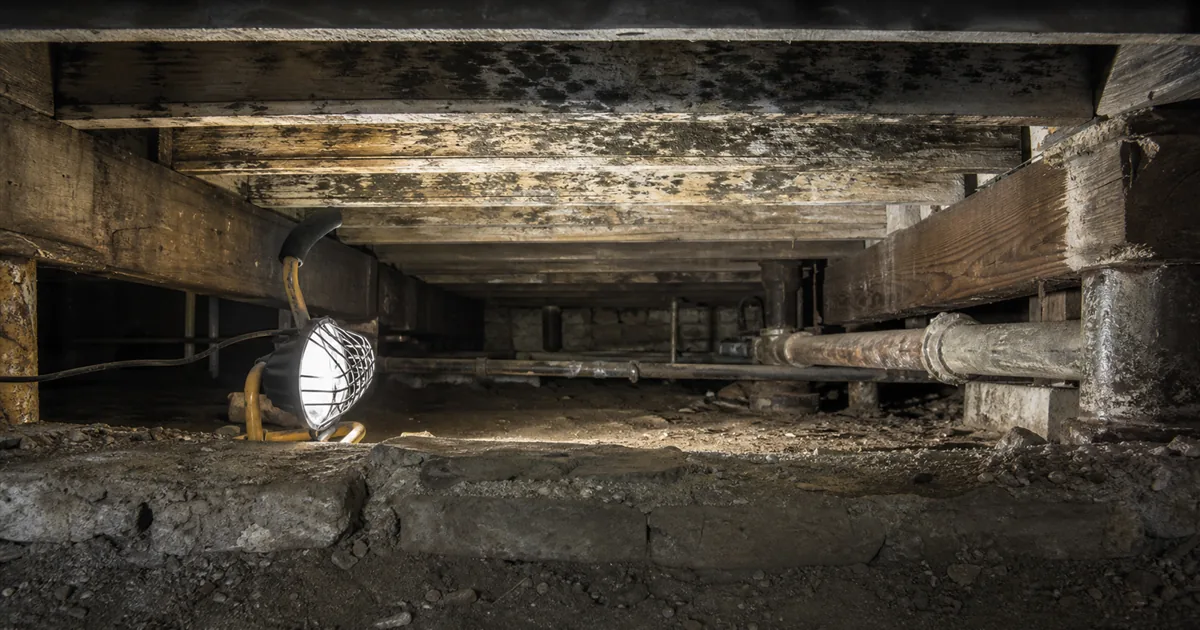
Crawl space mold comes from ground moisture, leaks, and poor airflow. See how licensed NYC removal works and how moisture control prevents its return.
Why Crawl Spaces Grow Mold
Crawl spaces combine limited access with materials that can stay damp, out of sight. Moisture can come in from the ground, be carried through the foundation area, condense on cool surfaces, or come from a plumbing leak. Weak air movement can slow drying once water reaches the space.
A musty odor above the crawl space, staining on framing, or damp insulation deserves investigation. EPA mold guidance makes moisture control the key part of mold control, and it specifically recommends controlling water entry into crawl spaces. The source and area affected should be established by an assessor before any removal commences. White material on soil or masonry is not always mold, so don’t diagnose the condition by color alone.
Crawl Space Remediation, Step by Step
- Evaluate the space. A licensed assessor documents the affected area, materials and moisture source.
- Write the protocol. Article 32 Remediation Protocol: Prepared by the Assessor for work over 10 square feet.
- Control dust and access. The remediator adheres to the protocol and prevents the disturbed material from migrating to occupied areas.
- Remove any damaged porous material. Moldy insulation, wood products that cannot be salvaged, and other affected porous materials are handled according to the scope.
- Clean the rest of the structure. The crew cleans settled contamination from retained surfaces.
- Dry and fix the source . Leaking, water entry and damp conditions must be corrected before closing the space.
- Clearance complete . The assessment after the remediation is carried out by a licensed assessor.
Vapor Barriers and Moisture Control
Where that is identified as the source, a vapor barrier can limit moisture from the ground from entering the crawl space. Some projects refer to encapsulation as a broader approach to moisture control. The right scope depends on how the water got there, how the space was built and what materials are going to dry out.
And a barrier doesn’t fix a plumbing leak or water coming in from outside. The assessor and contractor should identify those causes, and describe what each proposed measure is addressing. Keep humidity at 50% or less, if possible, and check the space after work. Our mold prevention guide covers moisture management for all seasons and doesn’t make this removal article into a generic mold prevention checklist.
Cost and Access Factors
There is no single fixed crawl-space price, so a responsible estimate must come from the assessed scope. The cost is dependent upon the area affected, type of material, source of moisture, the need for containment and access. An open space of the same size may require less labor than a low space with a narrow entryway.
Get a quote based on the independent protocol. It should state what material will be removed, what retained surfaces will be cleaned, how debris will be removed from the building, and what moisture correction is included. Typically $300 to $800 for inspection and testing, remediation priced separately. Do not accept a single unexplained number that combines assessment and removal on a covered job.
A responsible estimate spells out each of these.
| Estimate element | What it should state |
|---|---|
| Material removal | What material will be removed |
| Retained surfaces | Which surfaces will be cleaned |
| Debris handling | How debris will be removed from the building |
| Moisture correction | What correction is included |
| Price drivers | Area, material, moisture source, containment, access |
| Inspection and testing | Typically $300 to $800 |
| Remediation | Priced separately from assessment |
DIY Limits in a Crawl Space
A resident can clean mold from 10 square feet or less of non-porous tile, metal or glass. The decision tree is altered when crawl-space growth involves wood, insulation or other porous materials, and difficult working conditions. Disturbed latent growth can also blow dust into nearby areas. Ask how crews will protect occupied rooms connected to the crawl-space access point while work is being performed.
Assess a mild condition using the DIY decision guide. Article 32 requires licensed professionals for work over 10 square feet. Check credentials with the state mold program.* If the actual problem is a full basement, see the separate basement removal guide.*
Frequently Asked Questions
Why does my crawl space smell musty?
A musty odor could indicate damp material or hidden mold, but it doesn’t identify the source. Before recommending removal or a moisture-control system, an assessor should check for ground moisture, water entry, plumbing leaks, and porous materials that have been affected.
Can I remove crawl space mold myself?
The DIY rule may apply only to a small area under 10 sq. ft. on a non-porous surface. Crawl spaces commonly have porous wood or insulation, restricted entry and a bigger moisture problem. Licensed Article 32 remediation required for work over 10 square feet.
What is crawl space encapsulation?
The term usually refers to measures that isolate the crawl space from ground moisture, often using a vapor barrier as part of the plan. The project still has to deal with leaks and other water infiltration. Have the contractor identify the materials and the source of the moisture.
How much does crawl space mold removal cost?
The approved plan does not contain a verified crawl-space removal range. The quote is based on area, material, access, containment, moisture correction and any source repair. The licensed assessment is the first step and remediation quotes should be compared to the same written remediation protocol.
Will crawl space mold come back?
If there is ground moisture, a leak, or other damp condition, it can come back. Removal should end with a dry space and a fixed source. Continue to check humidity, water entry and musty smell after the project so a new problem is caught early.
Conclusion The crawl-space remediation is successful when the affected material is removed by the crew and the water that supported it is stopped by the property owner.