
Mold in NYC Schools: DOE Rules & Parent Rights
· NYC Mold Removal Services
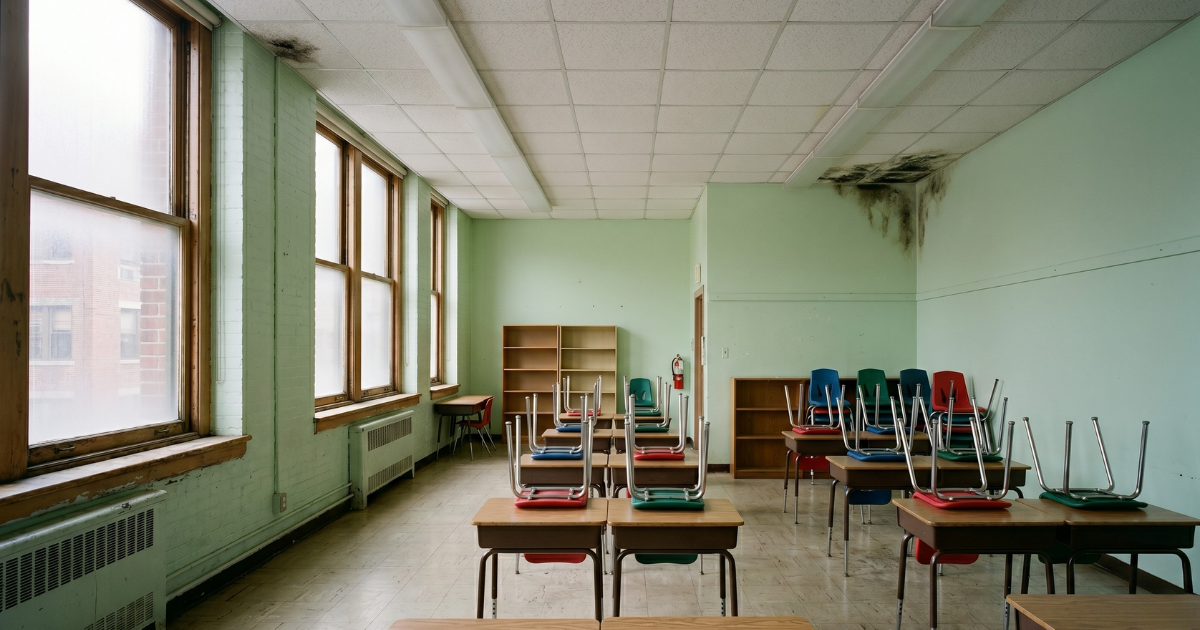
NYC schools must notify parents within 24 hours of mold discovery. Here's what DOE Regulation A-830 requires.
Children inhale more air relative to their body weight than adults, spend more time in the spaces with the highest spore concentrations, and have developing respiratory systems that handle mold exposure less well. Under Local Law 55, NYC public schools and licensed childcare facilities face a faster, more specific legal response to mold than residential buildings. NYC DOE Regulation A-830 requires written parent notification within 24 hours of a mold discovery, and the affected area must stay closed until licensed Article 32 remediation and clearance testing are complete. Parents can request documentation and escalate if they don't get it.
What DOE Regulation A-830 Requires
When mold is discovered in a NYC public school:
- Within 24 hours, the principal notifies parents of students in the affected area through the school's communication system.
- The affected area is immediately closed to students, and classes are relocated.
- The principal contacts the NYCDOE Division of School Facilities, which provides a licensed Article 32 assessor and remediator.
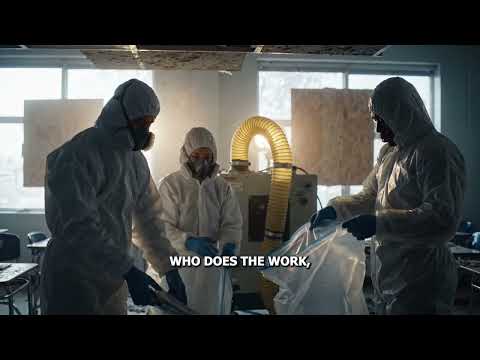
- The full Article 32 process applies: licensed assessor, written Remediation Protocol, a separate licensed remediator, and post-remediation clearance testing by an independent assessor.
- Parents are notified once the area is cleared for re-occupancy, and documentation is available on request.
Small area or budget constraints are not an exception — the protocol applies regardless of scope.
NYC Health Code Article 47: Licensed Childcare Facilities
Licensed daycare facilities in NYC are regulated under Article 47 of the NYC Health Code, which requires DOHMH notification for any visible mold, gives DOHMH authority to conduct unannounced inspections, and lets DOHMH order closure of the affected area or the entire facility until licensed remediation is complete. All assessment, remediation and clearance documentation must be kept on file for DOHMH review. DOHMH's inspection and enforcement powers for childcare facilities are broader, and its response times are faster, than for standard residential complaints.
What Parents Can Ask For
- 24-hour written notice of discovery in NYC public schools under A-830.
- Copies of the assessor's pre-remediation report, the Remediation Protocol, and the post-remediation clearance certificate.
- For public schools: escalation to the District Superintendent and the NYCDOE Division of School Facilities if notification or remediation timelines aren't met.
- For licensed childcare facilities: a complaint filed with 311 or nyc.gov/health if the operator fails to notify DOHMH or reopens without clearance.
If the school or facility can't produce the clearance certificate, the space shouldn't be reoccupied — it's the only document that verifies Article 32 remediation was properly performed.
Common Sources of Mold in NYC School Buildings
- Old HVAC systems — non-draining drain pans, dusty coil faces, and ductwork that hasn't been cleaned in years create ideal mold conditions inside air handling units.
- Flat roof membrane failures — common in NYC school buildings, leading to ceiling infiltration and mold in classrooms below.
- Below-grade spaces — cafeterias, gyms and storage rooms are often located below grade, the areas most susceptible to foundation moisture.
- Deferred capital repair — DOE capital planning can leave known moisture problems unaddressed for years, causing mold to recur in the same spots.
Frequently Asked Questions
What do I do if I find mold in my child's NYC classroom?
Report it to the principal in writing the same day, requesting a response under DOE Regulation A-830 and a timeline for licensed assessment. If you don't hear back within 24 hours, contact the District Superintendent's office and file a complaint with the NYCDOE Division of School Facilities.
Can a NYC school remediate mold while classes are in session?
A-830 requires closing the affected area and relocating students, and the rest of the school can generally stay open if the mold is contained to one classroom or area. If it affects the common ventilation system or spreads building-wide, DOHMH can order the whole building closed, and NYCDOE often relocates students during major remediations.
How long does mold remediation take in a NYC school building?
A typical single-classroom Article 32 cycle takes 1 to 2 weeks. Building-wide remediations involving structural repairs or HVAC replacement can take months due to DOE capital planning and procurement timelines.
My child's daycare has mold — can I report it to DOHMH?
Yes — file at nyc.gov/health or call 311. DOHMH responds faster to childcare complaints than residential ones, and once mold is confirmed, the affected area or entire facility can be ordered closed until clearance testing is completed.
Does NYC DOE handle mold in charter school buildings?
Charter schools inside NYCDOE buildings follow the same A-830 protocols. Charter schools in independently leased buildings fall under that building owner's maintenance obligations, though DOHMH still has authority over any licensed childcare program housed there — Article 32 licensing requirements apply to all school types.